

The History of Payroll: Why It Still Matters Today


Imagine Waiting for Your Pay… 5,000 Years Ago
I thought we'd take a little trip back in time today. So imagine waking up on payday 5,000 years ago. You've worked hard all month. You've done everything your employer asked of you. Finally, payday arrives ...
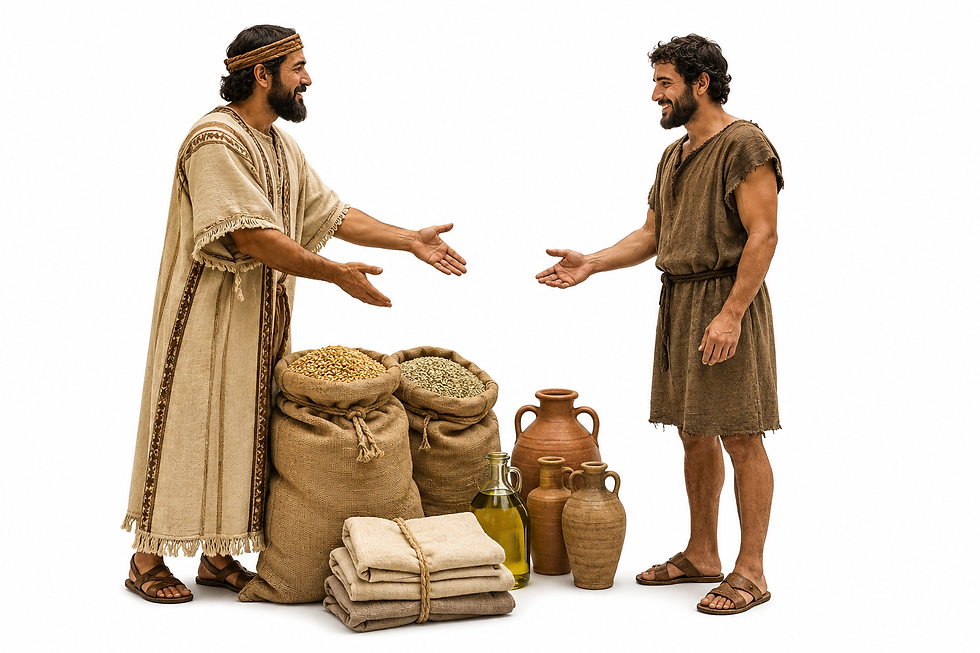
Only there's one small problem.
There are no banks.
No online banking.
No payslips.
No payroll software.
In fact, there isn't even any money as we know it. Instead, someone arrives with sacks of grain, jars of oil or perhaps a bundle of cloth. I don't know about you, but I'm not sure the supermarket would accept a sack of barley instead of my debit card.
It might sound strange to us today, but thousands of years ago, this was perfectly normal. Workers weren't paid in euros, pounds or dollars because coins hadn't even been invented yet.
So, how did employers know who had been paid and who hadn't?
That's where the story of payroll really begins, and thousands of years later, another civilisation would take payroll in a completely different direction.
The World's First Payroll Records
Long before spreadsheets and payroll software, the ancient Sumerians of Mesopotamia were already keeping detailed wage records. Around 5,000 years ago, scribes carefully pressed symbols into wet clay tablets using sharpened reeds. These tablets recorded who had worked, how much they were owed and what they had received.

Some workers received:
Grain
Beer
Livestock
Olive oil
Cloth
Not exactly the kind of payslip we're used to receiving today! But here's the interesting part. Those clay tablets served exactly the same purpose as modern payroll software.
They answered four very important questions:
Who worked?
How much were they owed?
Had they been paid?
Was there proof?
Here in Ireland today, payroll professionals also have to understand Revenue requirements, PRSI, USC, statutory leave and ever-changing employment legislation.
Five thousand years later, we're still asking those very same questions.
Did You Know?
The word "salary" comes from the Latin word salarium. While it's often said Roman soldiers were paid in salt, historians now believe the story is more complicated than that. What we do know is that Roman soldiers kept detailed pay records and could have deductions made from their wages—proving that payroll has always been about accurate records and accountability.
Building the Pyramids Wasn't Volunteer Work
Can you imagine building one of the great pyramids of Egypt? Many people still believe they were built entirely by slaves, but historians now know that large numbers of skilled workers were employed and received payment for their work.
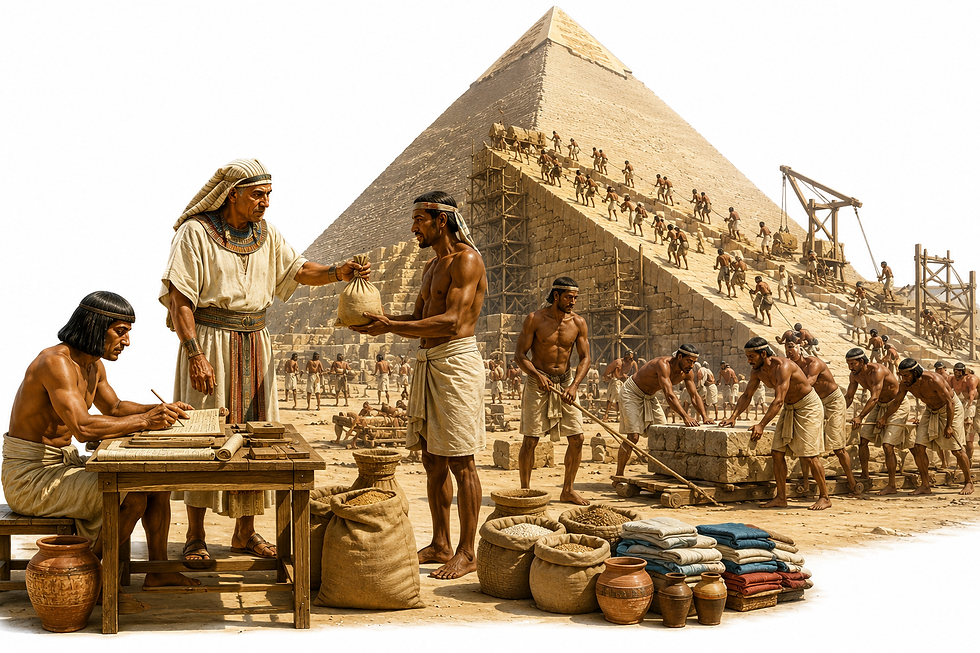
Their wages often included:
Bread
Beer
Clothing
Food rations
Records were carefully maintained because even then, employers understood something we still know today. People expect to be paid correctly. When they aren't, problems quickly follow.
The Roman Army Knew the Importance of Payroll
Now let's move forward a few thousand years. Imagine you're a Roman soldier.
You march across Europe, defend the empire and spend months away from home.
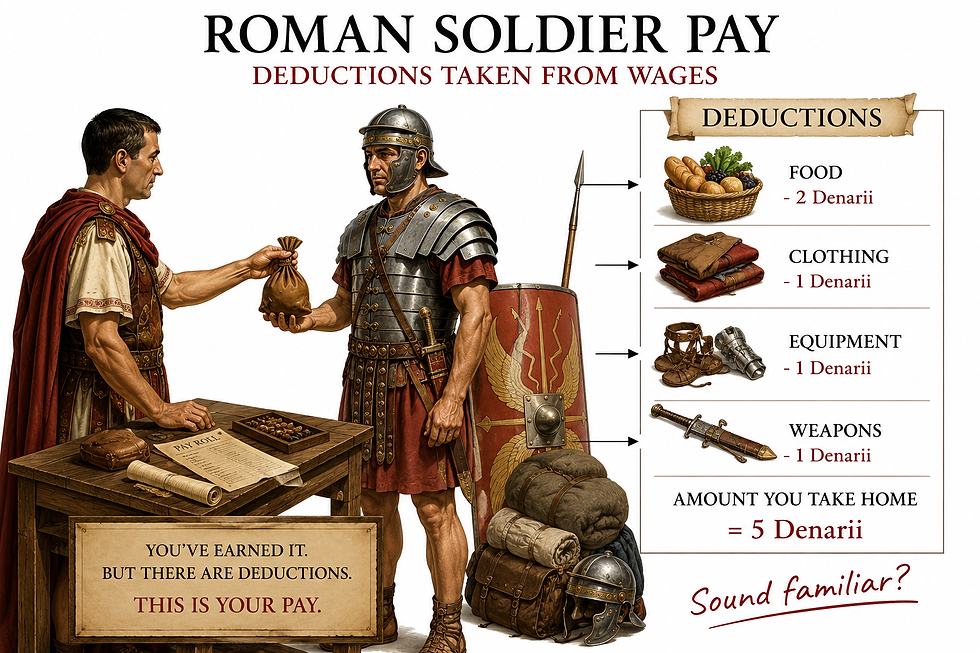
Eventually, payday arrives. But it wasn't always as straightforward as receiving your full wages.
Roman soldiers often had deductions taken from their pay for:
Food
Clothing
Equipment
Weapons
Sound familiar?
Thousands of years later we've changed the names of the deductions, but not the idea behind them.
Today's employees might see deductions for PAYE, PRSI, USC, pension contributions or health insurance. Roman soldiers saw deductions for sandals and shields instead!
Different deductions perhaps, but exactly the same principle.
Payroll doesn't just pay people, it protects livelihoods.
Medieval Markets and Handwritten Wage Books
As towns grew during the Middle Ages, businesses became larger and employed more people.

Employers began keeping handwritten wage books to record:
Days worked
Hours worked
Amounts paid
Outstanding wages
These records became increasingly important. Not just because employees wanted paying, but because businesses needed accurate records to manage their finances.
Good record-keeping was becoming a valuable business skill.
The Industrial Revolution Changed Everything
Then came the Industrial Revolution. Factories employed hundreds, sometimes thousands, of workers. Suddenly, payroll became far more complicated.

People worked:
Different shifts
Different hours
Overtime
Weekends
Piece-rate systems
Calculating wages manually became a huge responsibility.
Factory whistles dictated the start and end of shifts. Some workers were paid weekly, others daily, and many were paid according to how much they produced rather than simply the hours they worked.
Suddenly, one payroll clerk might have to calculate wages for hundreds of employees using nothing more than a pen, a ledger and a calculator that hadn't even been invented yet.
Imagine trying to calculate hundreds of wages every single Friday afternoon using nothing more than paper, pencils and arithmetic. One mistake could affect dozens of families. Payroll wasn't just administration anymore. It had become one of the most important functions in any organisation.
Then Came the Computer
For many years, payroll departments relied on enormous ledgers.
Every figure had to be written by hand.
Every calculation checked.
Every tax deduction was worked out manually.
Then computers arrived. Suddenly, calculations became faster.
Errors reduced.
Reports could be produced in minutes instead of days.

And today?
Most businesses use sophisticated payroll software that automatically calculates tax, pension contributions, statutory deductions and much more. It sounds wonderful—and it is—but here's something worth thinking about. Has technology replaced payroll professionals? Not at all.
Payroll Isn't Just About Pressing a Button
People sometimes think payroll is simply entering a few figures into a computer.
If only it were that easy!
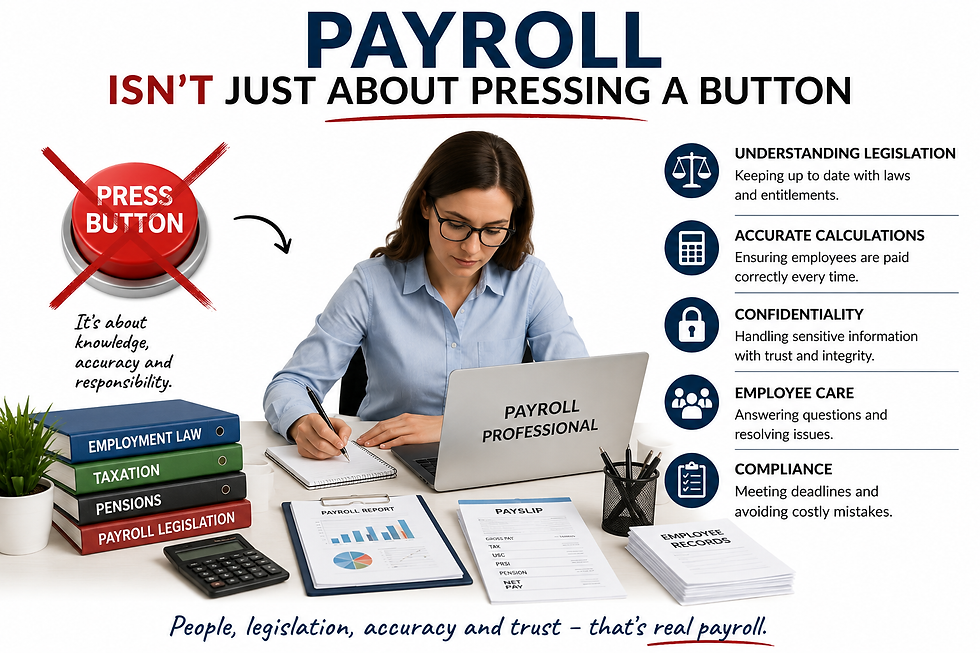
Modern payroll professionals need to understand:
Knowledge Area | Why It Matters |
Employment legislation | Employees must receive their legal entitlements. |
Taxation | Incorrect deductions can create expensive problems. |
Statutory leave | Maternity, paternity, parent's leave and sick leave must be processed correctly. |
Pensions | Contributions must be calculated accurately. |
Confidentiality | Payroll information is highly sensitive. |
Problem solving | Every employee situation can be different. |
The software performs calculations. People make the decisions.
Payroll Is Really About Trust
Very few of us spend payday checking every tax calculation or every pension deduction. We trust that someone has done their job properly.
That's a remarkable level of trust when you stop and think about it.
Think about your own wages. When payday arrives, most of us don't immediately calculate every deduction. We simply trust that everything has been done correctly.
That's quite a responsibility. Employees trust payroll professionals to:
Pay them correctly.
Protect their personal information.
Follow employment law.
Meet Revenue requirements.
Resolve problems quickly.
When payroll runs smoothly, very few people notice.
When something goes wrong, everybody notices!
Why Payroll Skills Are More Valuable Than Ever
Technology continues to evolve. Artificial Intelligence is becoming part of many workplaces. Automation is changing how routine tasks are completed.
Yet payroll professionals remain in demand. Why?
Because payroll isn't simply about calculations.
It's about interpreting legislation, understanding changing regulations, solving problems, communicating with employees and ensuring every individual receives exactly what they are entitled to. Those are skills that require judgement, knowledge and experience.
More Than Numbers
What does this tell us? Payroll has never really been about numbers.
It's about people.

Behind every payslip is someone paying a mortgage, buying groceries, supporting a family or saving for the future. Getting payroll right means helping people live their lives with confidence. That responsibility has remained unchanged for thousands of years.
Whether wages were recorded on clay tablets or processed through cloud-based software, the purpose has always been the same. To ensure people receive the right pay at the right time.
Did You Know?
Payroll has survived:
✔ Ancient civilisations
✔ The Roman Empire
✔ The Middle Ages
✔ The Industrial Revolution
✔ The arrival of computers
✔ Artificial Intelligence
The tools have changed dramatically, but payroll's purpose has remained remarkably consistent for more than 5,000 years.
Frequently Asked Questions
When did payroll begin?
Evidence suggests payroll records existed over 5,000 years ago in ancient Mesopotamia, where workers were paid using goods such as grain and beer, with payments recorded on clay tablets.
Why is payroll important?
Payroll ensures employees are paid accurately and on time while helping organisations comply with tax, employment and pension legislation.
Has technology replaced payroll professionals?
No. Modern software automates calculations, but payroll professionals are still responsible for interpreting legislation, handling complex employee situations, maintaining confidentiality and ensuring compliance.
Is payroll a good career?
Absolutely. Skilled payroll professionals are valued in organisations of every size. The role combines numerical accuracy, legislation, problem-solving and communication, making it both varied and rewarding.
One Final Thought
I suppose if those ancient Sumerian scribes could walk into a payroll office today, they'd be amazed by the technology.
Cloud software.
Electronic payslips.
Real Time Reporting.
Automatic tax calculations.
But after the excitement wore off, they'd probably smile. Because despite all the changes over the past 5,000 years, the purpose of payroll hasn't really changed at all.
It's still about keeping accurate records.
It's still about fairness.
And most importantly, it's still about people.
If you've ever thought about working in payroll, or you'd like to build practical skills that employers genuinely value, our QQI Level 5 Payroll (Manual & Computerised) and QQI Level 6 Advanced Payroll courses are designed to help you gain the confidence and knowledge needed to succeed. Whether you're starting your career, changing direction or looking to update your skills, we'd be delighted to help you take the next step.
The tools have changed.
The calculations have become faster.
The legislation has become more complex.
But one thing has never changed.
Every payday, somewhere in the world, someone is depending on a payroll professional to get it right.
Five thousand years ago, it was recorded on a clay tablet.
Today it's processed through sophisticated software.
Tomorrow, the technology will change again.
But payroll will still be about exactly the same thing.
People.
Want to see another Blog: Why Bookkeeping Qualifications Matter ...


It’s interesting to see how payroll started with handwritten records on clay tablets and eventually moved into digital systems. Today, Compass Mobile Dollar Tree makes it easier for associates to review paystub information without relying on physical payroll records.